
All Posts
The AI Privacy Reckoning 2026: Every Law, Real Threat, and What It Means Explained
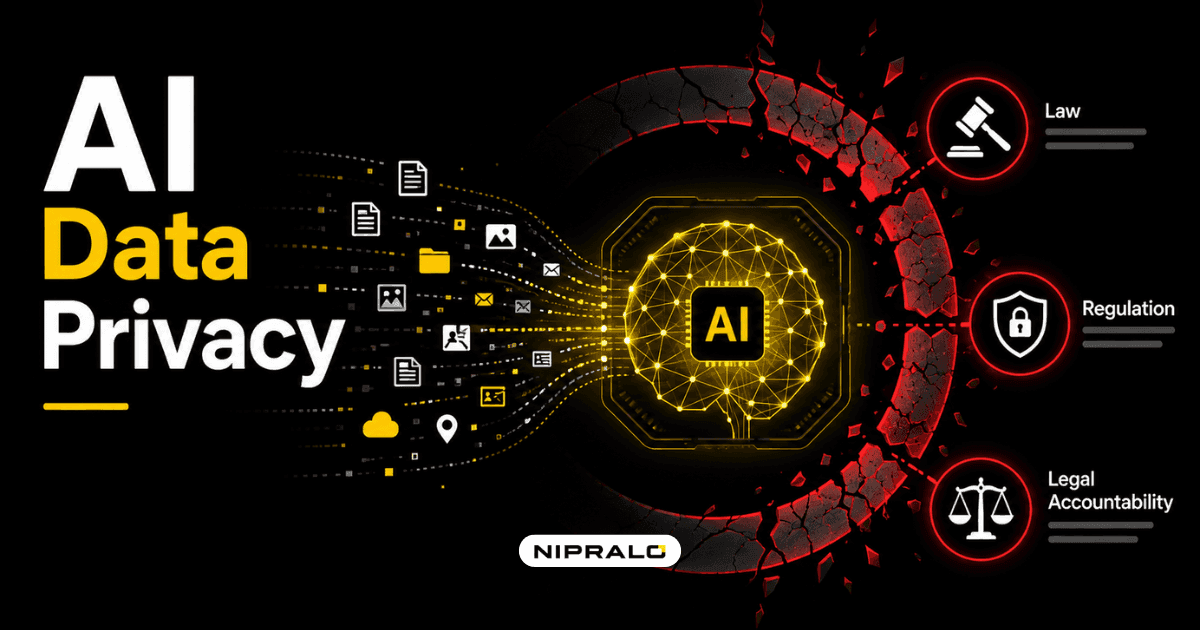
The AI industry made a quiet bet. Grab the data now, sort out the rules later.
For a few years, that worked. Models got trained on scraped websites, user chats, uploaded documents, images, whatever could be hoovered up. The permission question got waved off as a problem for future lawyers. Well, the future arrived. Regulators are writing rules with teeth, courts are filling with lawsuits over training data, and users are starting to ask where their information actually goes.
That is the reckoning. Not a single dramatic event, but a slow tightening from three directions at once. This post is about what is driving it, what it means for any business building with or buying AI, and what to do before it becomes your problem. A note upfront: privacy law is moving fast, so treat specifics here as a snapshot and check the current state before you act on it.
Why AI has a data privacy problem
AI models are hungry. To get good, they need enormous amounts of data, and the fastest way to get enormous amounts of data is to take it. That instinct is baked into how a lot of these products were built.
The problem is what got taken. Personal information. Copyrighted work. Private documents people uploaded assuming they stayed private. Much of it was used to train models without clear consent, because asking first is slow and taking is fast.
Does AI use your data for training?
Sometimes, yes, and this is the part that unsettles people once they notice it. Depending on the tool and its settings, what you type, upload, or generate can be used to improve the model. Some tools now let you opt out, some do it by default, and many bury the answer deep in the terms. The honest summary: unless you have checked, you often do not know.
That uncertainty is exactly what is fuelling the backlash.
The three forces converging
The reckoning is not one thing. It is three separate pressures arriving at the same time, and together they are what makes this hard to ignore.
Force one: regulation is catching up
Lawmakers moved slower than the technology, but they are moving now. The EU AI Act is phasing in obligations for AI systems, tiered by risk. India's Digital Personal Data Protection Act and its rules are taking shape, setting duties for how personal data is collected and used. GDPR-style enforcement is being pointed at AI specifically.
The direction is clear even if the details keep shifting: collecting and using personal data through AI is becoming a regulated activity with real penalties. Check the current status of each, because the specifics change often, but the trend does not.
Force two: the lawsuits are piling up
Courts are now full of cases over what went into these models. News publishers, authors, artists, and companies arguing their work or data was used to train AI without permission or payment. However these land, they are reshaping what is legally safe to build on. A tool trained on contested data is a tool sitting on unresolved legal risk, and that risk can flow to the businesses using it.
Force three: users stopped trusting by default
This is the quiet one, and maybe the most powerful. People are waking up to the idea that their chats, their uploads, their photos might be feeding a model somewhere. And they do not like it. Trust, once it goes, is expensive to win back. Increasingly, "we do not train on your data" is becoming a selling point, which tells you where the market is heading.
What this means for your business
Here is the shift that matters. Data privacy is moving from the legal team's problem to everyone's problem, including yours, whether you build AI or just use it.
If you plug an AI tool into your product, or hand customer data to an AI vendor, their privacy exposure becomes partly yours. If that vendor trained on questionable data, or leaks what you feed it, your customers will not care whose fault it technically was. They will blame you, because it was your product they trusted.
- "Where does our data go" is now a survival question. Not a nice-to-have. Know it for every AI tool you use.
- Your vendors' risk is your risk. Their compliance gaps and lawsuits can land on you.
- Trust is a feature. Being able to tell customers exactly how their data is handled is becoming a competitive edge.
This is exactly the kind of thing we think about when we build custom products, where the data goes, what the AI layer can and cannot see, and how to keep customer information out of places it should not be.
Is it safe to put company data into AI tools?
It depends entirely on the tool, and the honest answer is "check before you paste." Some enterprise tools contractually promise not to train on your data and keep it isolated. Some consumer tools make no such promise. Pasting sensitive customer data, contracts, or internal documents into the wrong tool is a real risk, not a theoretical one.
The practical rule: treat anything you put into an AI tool as potentially leaving your control, unless the tool explicitly and contractually says otherwise. For businesses handling sensitive data, that often means a properly configured setup rather than whatever free tool is easiest.
What to do now
You do not need to panic, and you do not need to swear off AI. You need to get deliberate. A few honest steps put you ahead of most.
- Map where your data goes. List every AI tool your business uses and what data each one touches. Most businesses have never done this.
- Read the data terms. For each tool, find out whether it trains on your data and whether you can opt out. If you cannot find the answer, treat that as your answer.
- Separate sensitive from safe. Decide what data must never go into a general AI tool, and set a clear rule your team follows.
- Prefer tools that isolate your data. Where it matters, choose or build setups that keep your data yours, rather than the cheapest option.
For the regulatory grounding, the official EU AI Act overview is the reference source, and you can see how our team approaches building products responsibly on our services page.
The short version
AI got built on a bet that you could take the data now and settle the rules later. That bet is being called. Regulation is arriving with real penalties, courts are full of training-data lawsuits, and users have stopped trusting AI tools by default. For your business, the lesson is simple and slightly uncomfortable: where your data goes is now a question you have to answer, because your vendors' risk is your risk and your customers' trust is yours to lose. Map your data, read the terms, keep the sensitive stuff out of the wrong tools. The businesses that treat privacy as a feature will pull ahead of the ones still hoping nobody asks.
Not sure where your customer data actually goes?
Book a free 20-minute call. Our team will help you map which AI tools touch your data, flag the risky ones, and figure out what a privacy-safe setup looks like for your business.
Frequently Asked Questions
Why is data privacy a problem for AI products?

AI models need huge amounts of data to train, and the fastest way to get it was to take it, often personal information, copyrighted work, and private uploads used without clear consent. That approach is now colliding with new regulation, lawsuits, and rising user distrust.
What laws regulate AI and data privacy?
Several are phasing in worldwide, including the EU AI Act, India's Digital Personal Data Protection Act and its rules, and GDPR-style enforcement now aimed at AI. The specifics change often, so check the current status, but the overall direction is clearly toward stricter rules and real penalties.
How can businesses use AI without breaking privacy rules?
Map every AI tool you use and what data it touches, read each tool's data terms to see if it trains on your data, separate sensitive data from safe, and prefer tools that contractually isolate your data. For sensitive information, a properly configured setup usually beats the cheapest free tool.
Is it safe to put company data into AI tools?
It depends on the tool. Some enterprise tools promise not to train on your data and keep it isolated, while many consumer tools make no such promise. Treat anything you put into an AI tool as potentially leaving your control unless the tool explicitly and contractually says otherwise.
What laws regulate AI and data privacy?
Several are phasing in worldwide, including the EU AI Act, India's Digital Personal Data Protection Act and its rules, and GDPR-style enforcement now aimed at AI. The specifics change often, so check the current status, but the overall direction is clearly toward stricter rules and real penalties.